|
ENVIRONMENT
The JHL ranch is located in the Southwest corner of what is known as the
Nebraska Sandhills. The Sandhills and the ranch were first settled in the
1880s. Previous to that time the 'hills' were thought of as uninhabitable
due to the harsh climate and blowing sand. But with gradual climactic
changes the last one hundred years (more moisture) and careful grazing
practices the Nebraska Sandhills have become one of the premier grazing
areas in the United States.
WATER, WATER, WATER
The Sandhills, while semi-arid on the surface, reside over one of the
largest underground fresh water reservoirs in the world. The JHL ranch
"floats" on over approximately 15,000,000 acre/feet of water. A
unique geological attribute is that the headwaters of 12 creeks and streams
are located within 15 miles of JHL borders. This is an area that is almost
literally a fountain of water.
Between the abundance of groundwater and the approximate 200-250 feet
hill height, enough pressure is provided to power "flows"
(artesian springs). You had also better be aware of where you dig in our
meadows, as you will 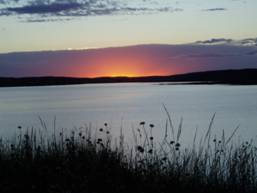 probably
find water in the hole you dig. It could possibly be said the Sandhills are
the biggest filtration system in the world. probably
find water in the hole you dig. It could possibly be said the Sandhills are
the biggest filtration system in the world.
Through intentional stewardship practices the meadows and pastures on
the JHL have never seen broadcast inorganic pesticides, herbicides or
fertilizers. It makes possible the future raising of organic livestock on
the JHL.
|